Call:+86-571-82912975
 https://www.dkyarn.com
 English
 中文简体
中文简体
Pink/Rose Red/Red China 150D/48F Dty Polyester Yarn High Strength AA Grade Textu...
See Details

When textile buyers and product developers source polyester yarn for the first time — or when they are sourcing a new product category — the distinction between DTY and FDY is one of the first technical questions they encounter. Both are polyester filament yarns. Both are produced from the same raw material (polyethylene terephthalate, PET). Both are measured in denier and used across a wide range of textile applications. But the way they are processed after extrusion produces yarn with different physical structures, different surface textures, different stretch behaviors, and different suitability for specific fabric types and end uses. Ordering the wrong type for a specific application produces fabric that doesn't behave as expected — even if every other specification is correct.
All polyester filament yarn starts the same way: PET polymer chips are melted, extruded through spinnerets to form continuous filaments, and solidified by cooling. At this stage, the filaments are in an unoriented or partially oriented state — the polymer chains are not yet aligned along the fiber axis, and the yarn lacks the strength and dimensional stability needed for most end uses. What happens next is where DTY and FDY diverge.
FDY (Fully Drawn Yarn) is produced by a spin-draw process in which the filaments are both extruded and drawn (stretched) in a single continuous operation. The drawing step orients the polymer chains along the fiber axis — this molecular alignment is what gives the yarn its tensile strength, low elongation, and dimensional stability. The drawing ratio and conditions determine the final yarn's properties: draw ratio, yarn tenacity (strength per unit of linear density), elongation at break, and thermal shrinkage.
Because FDY filaments are fully oriented with minimal crimp or texture, the yarn has a smooth, straight structure. FDY lies flat in the fabric, aligns consistently during weaving, and produces fabrics with a clean, smooth surface and good dimensional stability. The yarn's low elongation (typically 25–40% elongation at break for standard FDY) means it doesn't stretch during processing or in the finished fabric, which is important for warp yarns in weaving and for fabrics that must maintain precise dimensions.
FDY is commonly used for woven fabrics, sewing thread, embroidery thread, and applications where a flat, smooth, high-luster yarn is required. The high molecular orientation achieved in the draw step produces excellent dye penetration under standard disperse dyeing conditions, and the consistent, controlled structure gives FDY fabrics predictable color yield across production batches.
DTY (Draw Textured Yarn) is produced in two stages. First, the extruded filaments are only partially oriented in a POY (Partially Oriented Yarn) production step. The POY is then processed through a separate draw-texturing machine that simultaneously draws the yarn to complete molecular orientation and passes it through a texturing zone — typically a friction disc system or a pin-and-heater assembly — that introduces a permanent helical crimp into each filament. The crimp is locked in by a heat-setting step that stabilizes the textured structure.
The crimped filaments in DTY give the yarn bulk and stretch that FDY lacks. DTY has a soft, woolly feel that FDY doesn't have, and significantly higher elongation (typically 25–35% recoverable stretch for standard DTY, though the specific stretch depends on the draw ratio and texturing conditions). These bulk and stretch are the defining characteristics that make DTY suitable for applications where FDY would produce fabric that is too flat, stiff, or inextensible.
The intermingling of DTY — the number of intermingled (tangled) points per meter of yarn — is an additional controllable parameter. Non-intermingled (NIM) DTY has no tangled points and is softer and more loosely structured; semi-intermingled (SIM) DTY has moderate tangling for processing stability; high-intermingled (HIM) DTY has dense tangling and behaves more cohesively during knitting and weaving. The intermingling level is specified based on the processing equipment being used and the fabric structure being produced.
| Property | DTY (Draw Textured Yarn) | FDY (Fully Drawn Yarn) |
|---|---|---|
| Filament structure | Crimped/textured — permanent helical crimp | Straight/flat — no crimp, fully aligned |
| Surface character | Soft, bulky, slightly fuzzy appearance | Smooth, flat, high luster |
| Elongation/stretch | Higher — 25–35% recoverable stretch is typical | Lower — 25–40% elongation at break, minimal recovery |
| Fabric texture | Soft, comfortable against skin; suitable for close contact | Smooth, cool to touch; less soft than DTY |
| Fabric drape | Better drape in knitted fabrics; more fluid | Crisper drape in woven fabrics; dimensional stability |
| Typical fabric constructions | Circular knit, warp knit, velvet, fleece, and brushed fabrics | Woven fabrics, taffeta, satin, sewing thread, and embroidery |
| Processing behavior | Softer, more elastic — requires appropriate knitting tension | Stable, dimensionally consistent — preferred for warp in weaving |
| Cost | Slightly higher than FDY at equivalent denier — two-step process | Lower — single-step spin-draw process is more efficient |
| Luster options | Semi-dull standard; bright and full-dull available | Bright (high luster), semi-dull, and full-dull available |
| Typical denier range | 50D–600D (wide range for different fabric weights) | 20D–500D (extends to very fine deniers for lightweight fabrics) |
Circular-knit sportswear fabrics — the interlock and single-jersey constructions used for T-shirts, running tops, and training wear — are typically produced from DTY. The yarn's crimp structure contributes to the fabric's softness against skin, and the slight stretch in the DTY allows the knitting machine to form consistent loops without excessive tension variation. FDY used in the same circular-knit construction produces a flatter, less comfortable fabric that lacks the pleasant hand feel consumers expect from activewear.
Woven fabric production — particularly the warp direction where yarn is held under constant tension on the loom — uses FDY because its dimensional stability and low elongation allow consistent shed formation and accurate fabric width. DTY used as warp yarn on a loom would create uneven tension as the crimped structure responds to the heddle and reed motion, producing irregular weave density and potential processing problems. Weft yarns in woven fabrics may use DTY in some constructions (such as velvet, where the weft forms the pile), but FDY warp is standard in most conventional woven polyester apparel and home textile fabrics.
Warp-knit velvet and woven velvet constructions use DTY specifically because the crimped filaments create the pile (the standing loops or cut pile that gives velvet its characteristic soft, dense surface). The crimp in DTY filaments allows the pile to stand upright and resist flattening, giving velvet its rich appearance and tactile quality. FDY would produce a flatter pile with less visual depth — the straight filaments don't create the dimensional effect that DTY's crimp produces.
Polar fleece and brushed fabrics use DTY because the texturing process creates fibril ends and fine surface fibers that lift during the brushing or napping process to form the fabric's characteristic soft surface. The mechanical brushing action — wire-covered rolls that tease fiber ends from the yarn structure — works effectively on DTY because the crimped, bulky structure provides fibril ends close to the fabric surface that can be lifted. FDY's straight, tightly packed filaments provide fewer accessible fibril ends and produce a less effective brushed surface.
DTY (and FDY) specifications include a luster designation that describes the optical character of the yarn. The luster is controlled by the titanium dioxide (TiO₂) content added during polymerization:
Bright (or Full Bright / B) yarn has very low TiO₂ content, producing a high-luster, shiny appearance. Bright DTY is used for fabrics where high sheen is desired — satiny lingerie, shiny sportswear, decorative fabrics, and metallic-look textiles.
Semi-Dull (or SD) yarn has a moderate TiO₂ content that scatters light and reduces luster, producing a matte appearance closer to natural fibers. Most standard apparel and sportswear fabrics use semi-dull DTY because it looks less artificial than bright yarn and provides a more comfortable visual quality. SD is the most common standard specification for DTY in apparel applications.
Full Dull (or FD) yarn has the highest TiO₂ content and the most matte appearance, used specifically to mimic the flat, non-reflective surface of cotton or other natural fibers in applications where the synthetic identity of the fabric should not be visually apparent.
Yes — combining DTY and FDY in the same fabric is a deliberate technique used to achieve specific surface effects. Fabrics with DTY weft and FDY warp in a woven construction use each yarn type where its properties are most advantageous: the FDY provides dimensional stability in the warp direction, while the DTY in the weft contributes softness and slight cross-grain stretch to the finished fabric. Some knitted fabrics use DTY for the ground loops (providing bulk and softness) with fine FDY laid-in as a structural element. The combination is specified by the fabric designer based on the desired balance of hand, structure, and performance.
POY (Partially Oriented Yarn) is the intermediate product from which DTY is made. POY is produced at a higher spinning speed than traditional undrawn yarn, resulting in partially oriented polymer chains — stronger than undrawn yarn but not yet at the full orientation of FDY. POY is not suitable for most end uses directly because its elongation is too high (typically 130–170%) and its shrinkage too variable. It is an intermediate that is converted into DTY by the draw-texturing process: the POY is drawn to complete molecular orientation while simultaneously being textured. Some weavers and knitters use POY directly for specialized high-bulk applications, but DTY (derived from POY) is the standard commercial product for apparel and home textile fabrics.
Single-jersey circular knit fabrics for standard T-shirt and basic sportswear applications most commonly use 75D/72F or 75D/36F DTY (75 denier total, with 72 or 36 individual filaments). The filament count affects the yarn's softness — more filaments at the same total denier means finer individual filaments, which produce a softer, more cotton-like hand. 75D/72F is softer than 75D/36F because the 72-filament construction divides the same weight into finer individual strands. For heavier-weight fabrics (interlock, heavy single jersey), 150D/96F or 150D/48F DTY is commonly used. Finer fabrics for lightweight athletic wear may use 50D or even 30D DTY. The specific denier and filament count should be matched to the knitting machine gauge and the desired fabric weight per the fabric developer's specification, rather than assumed from the end-use category alone.
Polyester DTY Yarn | Colorful DTY Yarn | Spandex Yarn | Contact Us
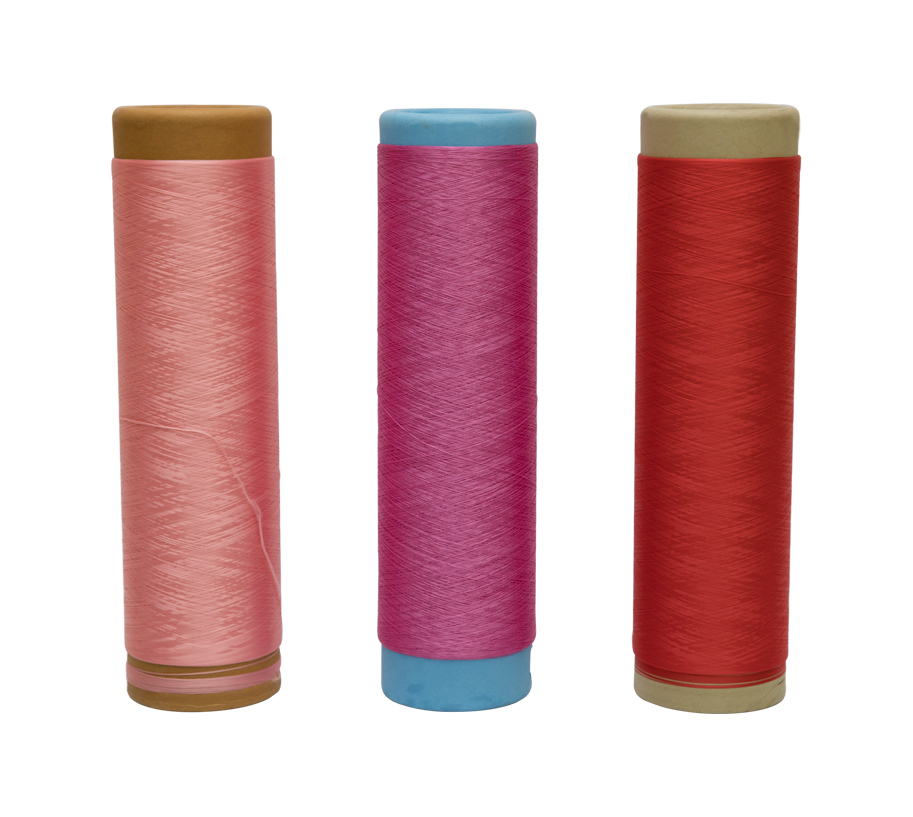
Pink/Rose Red/Red China 150D/48F Dty Polyester Yarn High Strength AA Grade Textu...
See Details
Breathable Brown Black 300D/96F DTY Yarn High-Intermingled 99.99% Polyester Yarn...
See Details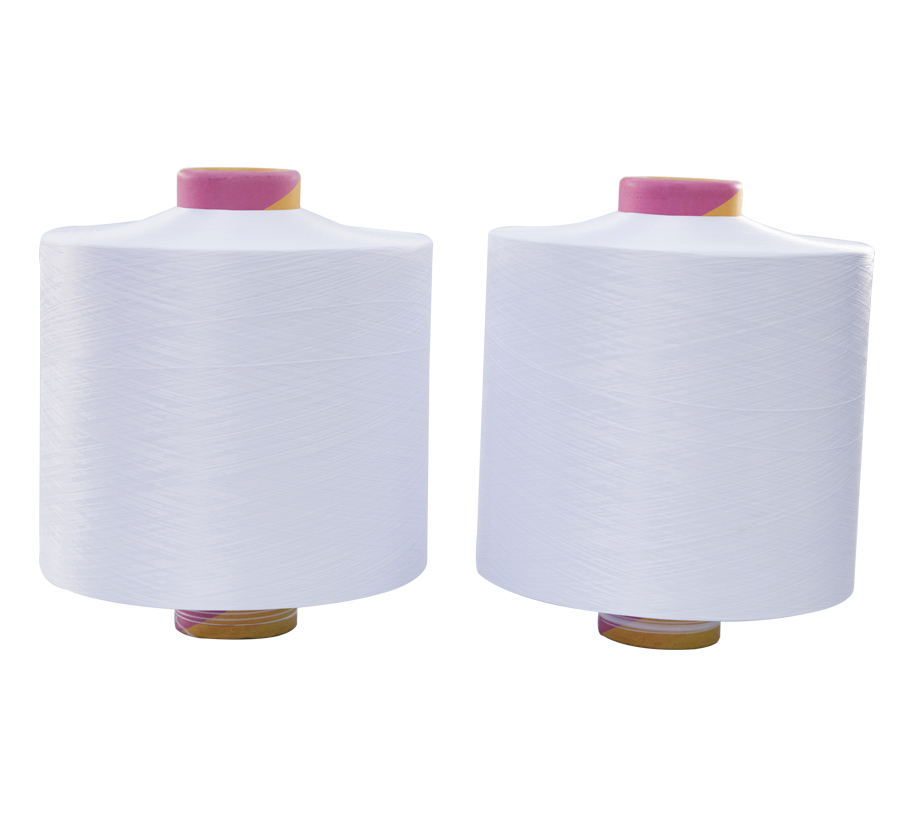
300D/96F OPTICAL WHITE NIM Polyester Yarn Name: 300D/96F OPTICAL WHITE NIM Polye...
See Details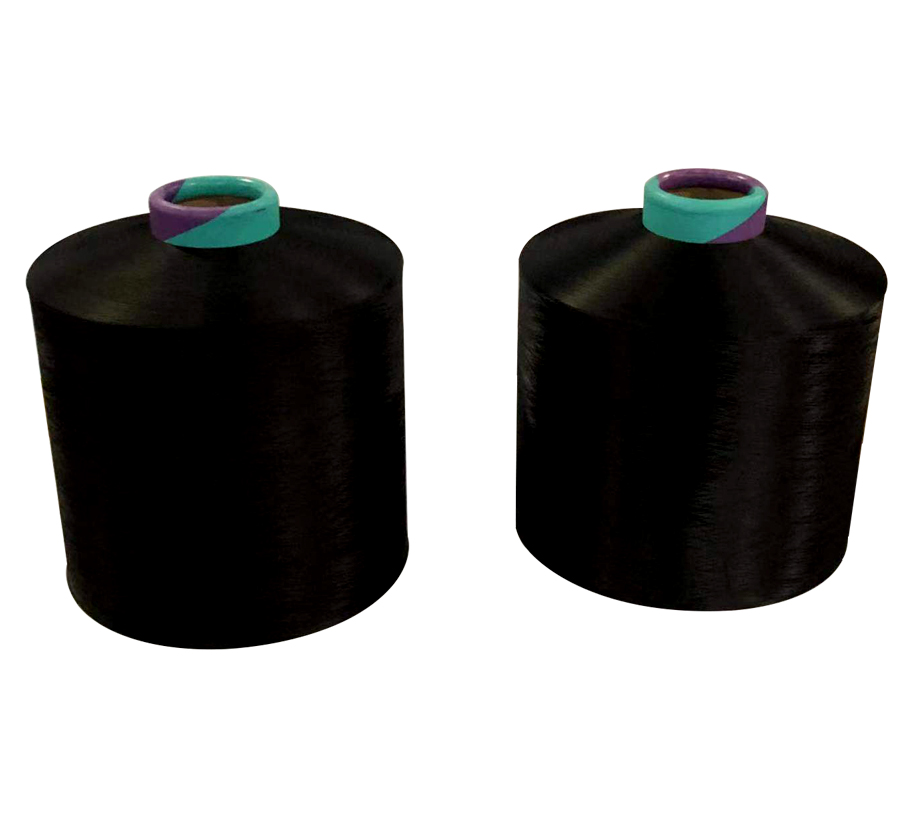
Moisture-Absorbent 100D/36F BLACK NIM Polyester Yarn Material: 99.99% Polyester ...
See Details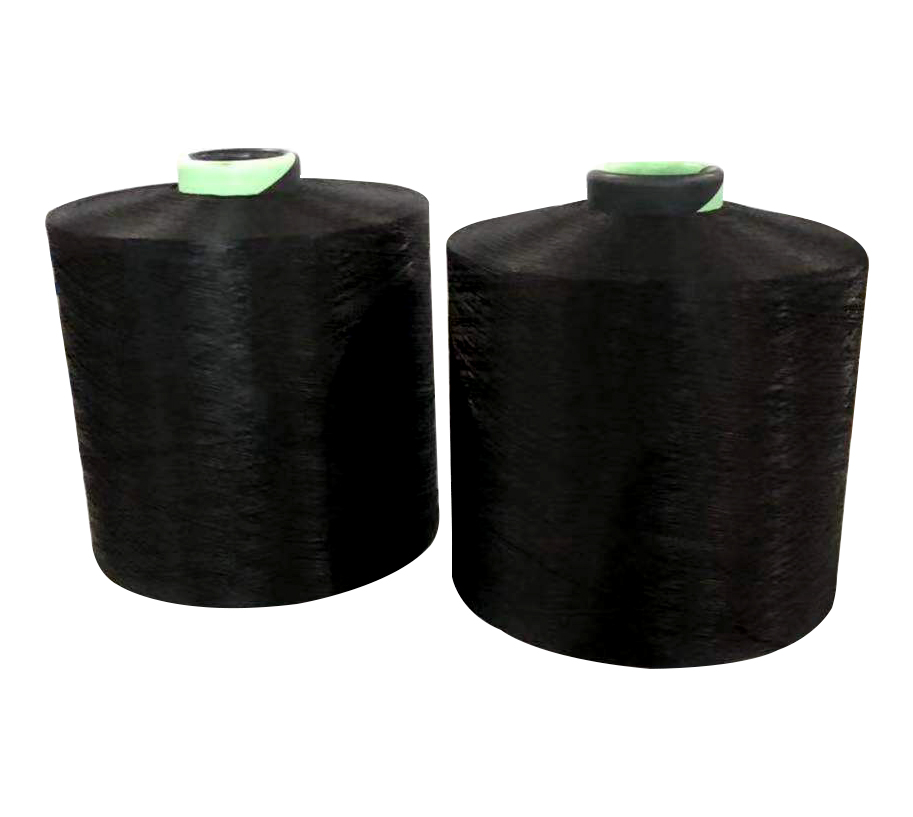
Product Name: DTY 600D/192F HIM Polyester Yarn Size: 600D/192F Twist: S+Z Color:...
See Details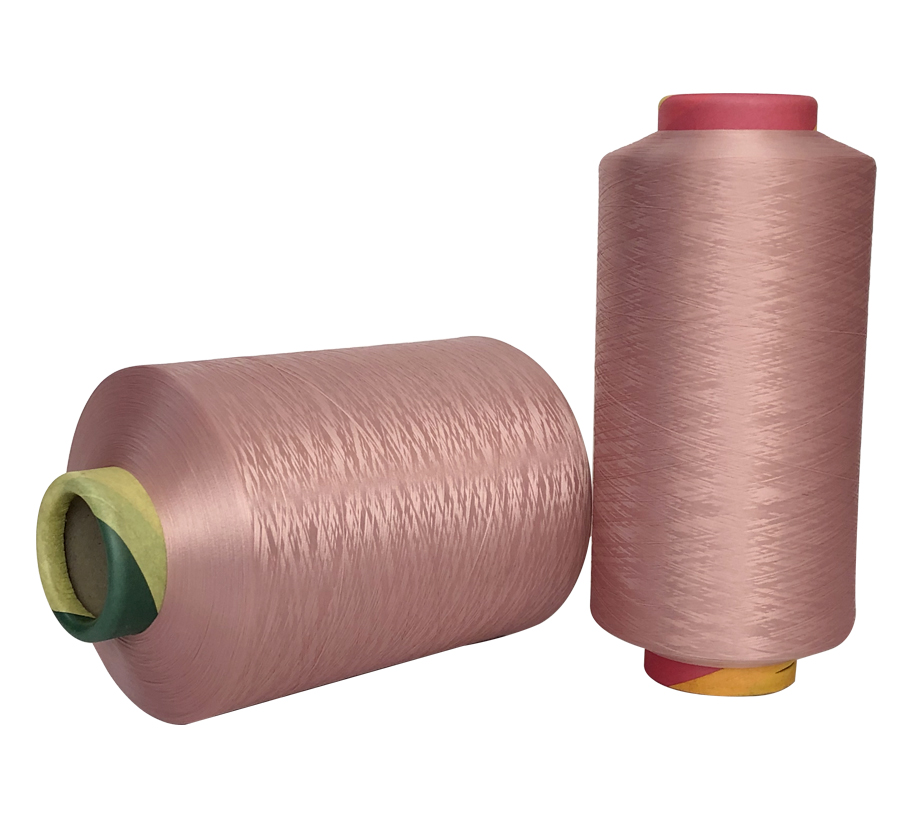
300D Rubber Red 99.99% Polyester Yarn for Knitting & Weaving Color: Rubber R...
See DetailsCopyright © Hangzhou Dingkai Chemical Fibre Co., Ltd. All Rights Reserved.
Wholesale China Polyester DTY Yarns Factory