 Call:+86-571-82912975
 https://www.dkyarn.com
 English
 中文简体
中文简体
Breathable Brown Black 300D/96F DTY Yarn High-Intermingled 99.99% Polyester Yarn...
See Details

On a 28-gauge circular knitting machine with 96 feeders, a 150D/48F package is consumed in minutes, not hours, and a single filament that whips loose between the creel and the needle leaves a mark in the fabric. That operating reality is the short answer to how DTY yarn supports knitting applications: the yarn is engineered upstream, at the texturing machine, so the knitting floor does not have to compensate for it.
Draw texturing yarn, or DTY, is a continuous filament polyester yarn that has been false-twist textured to build bulk, crimp and controlled residual stretch. It remains a filament yarn, so it does not shed short fibres the way spun yarn does, and it carries enough bulk to cover the needles and produce an opaque fabric. Most fine-gauge knitwear is built on it for those two reasons alone.
DTY yarn supports knitting through four measurable properties: bulk, intermingle cohesion, elongation and recovery, and a clean low-hairiness surface. Each one is set at the texturing machine, and each one shows up as a visible defect when it drifts out of range.
Bulk is the property that lets a filament yarn behave like a spun yarn at the needle. False-twist texturing coils the filaments so the yarn occupies more volume per unit of weight, which covers the needle line, closes the stitch and gives single jersey its opacity. A knitter who switches from a flat filament to a textured yarn of the same denier sees fabric weight and cover change without touching a single machine setting.
Intermingle cohesion is what keeps that bulk under control. Without intermingled nodes, the filament bundle in a package can separate, snag and open into a ribbon during unwinding, and that shows up on the fabric as stop marks and needle lines. Node density is decided during texturing and can be specified, which is why it belongs in the purchase order rather than in a general product description.
| Property | Typical DTY position | Effect on the knitting floor |
| Bulk and crimp | False-twist textured filament with low residual shrinkage | Covers needles evenly, sets opacity and hand in single jersey |
| Intermingle density | NIM 0-10, SIM 40-50, HIM 100-120 nodes per meter | Determines how the filament bundle holds together from creel to needle |
| Elongation and recovery | Elastic response retained after texturing | Stitch recovery in rib, interlock and high-elastic structures |
| Denier and filament count | 75D/36F through 900D/288F in standard production | Fabric weight, drape, softness and machine gauge compatibility |
| Surface and spin finish | Finish applied during texturing | Friction at the feeders, lint generation and needle wear |
DTY (draw texturing yarn) is a continuous filament polyester yarn that has been false-twist textured, giving it bulk, crimp and controlled stretch while remaining a filament yarn with no staple fibre shedding.
Intermingle density, expressed as nodes per meter, is the most useful single number a knitter can request, because it determines whether the filament bundle stays together between the creel and the needle.
Three bands cover most commercial supply. NIM, non-intermingled yarn, carries roughly 0 to 10 nodes per meter. SIM, semi-intermingled yarn, sits at around 40 to 50 nodes per meter. HIM, high-intermingled yarn, runs from about 100 to 120 nodes per meter. These are manufacturing ranges rather than marketing labels, and producers quote them to describe what the intermingle jet actually produced on the package.
In knitting, the consequence is unwinding behaviour. A low-intermingle package runs with the filaments free to separate, which is workable on slow machines and in open structures where yarn tension is gentle. A high-intermingle package keeps the bundle closed under tension, which is what a 96-feeder circular machine needs when yarn is pulled at speed through ceramic guides and positive feeders.
Buyers who want the technical background before setting a purchase specification can review the difference between NIM, SIM and HIM yarn and match the band to the machine, not to the price list.
Nodes per meter is the HIM band, where filament cohesion is high enough for high-speed circular knitting and flat knitting without ribboning.
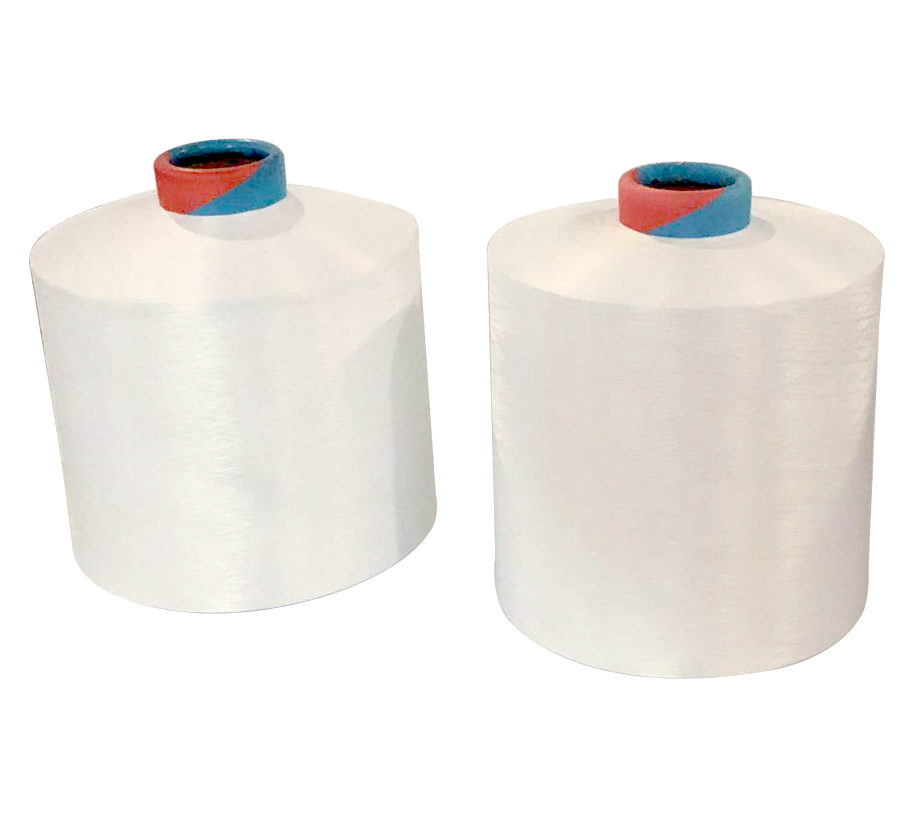 150D48F Recycled HIM Polyester DTY YarnRecycled 150D/48F HIM DTY polyester yarn for high-speed circular and flat knitting, suitable for socks, underwear, sportswear, and seamless garments.View Product →
Denier and filament count should be selected backwards from the knit structure, because machine gauge and target fabric weight narrow the specification far more than the yarn catalogue does.
Denier governs fabric weight and coverage per stitch. Filament count governs how smoothly those filaments pack into the yarn cross-section, which is why two yarns of the same denier can knit into fabrics that feel completely different. A 150D/36F and a 150D/48F yarn both weigh the same per unit length, but the 48-filament version carries more, finer filaments and produces a smoother, softer surface.
| Knit structure | DTY specification commonly used | Reason for the match |
| Fine-gauge single jersey, 28-32 gauge | 75D/36F, 100D/36F | Low fabric weight with high stitch density |
| Mid-gauge jersey and 1x1 rib | 150D/36F, 150D/48F | Balances cover with elastic recovery |
| Interlock, pique and structured knits | 150D/48F, 200D/96F, 250D/96F | More filaments per cross-section for a smoother face |
| Fleece, terry and brushed knitwear | 300D/96F | Bulk for loft and brushing without adding plies |
| Technical mesh and industrial knits | 450D/192F, 600D/192F, 900D/288F | Strength and dimensional stability in coarse gauge |
DTY yarn supplies bulk and stitch cover, but on its own it does not deliver enough permanent stretch for close-fitting knitwear, which is why it is normally knitted alongside an elastane yarn rather than replaced by one.
Texturing gives DTY a crimp that recovers partially, and high-elastic DTY variants push that recovery further, which is enough for relaxed jersey and light rib. Cuffs, waistbands, compression panels and activewear need a yarn that returns to length after repeated extension, and that job belongs to elastane. Plating a fine spandex with a DTY ground yarn is the standard route, and the elastane count is chosen separately from the DTY specification.
For buyers assembling a full knit package, elastane is available in a continuous count range, and it is worth specifying both yarns from the same technical conversation rather than from two unrelated purchase orders; spandex yarn suppliers covering 15D to 1120D can be matched against the DTY denier chosen for the ground structure.
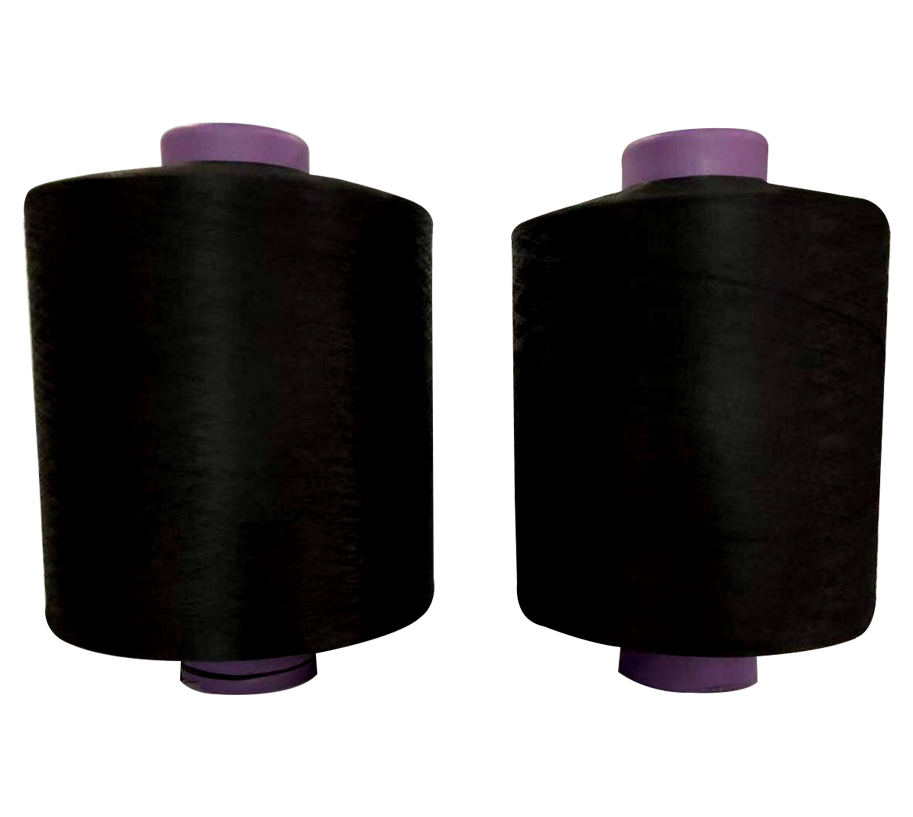 300D/96F Black High Elastic Polyester DTY YarnBlack high-elastic 300D/96F polyester DTY yarn for seamless knitting and weaving, suited to socks, underwear, sportswear, swimwear, gloves, and embroidery.View Product →
Elastane count range that can be plated with a DTY ground yarn for cuffs, waistbands and compression knitwear.
Buying color at the yarn stage removes dyeing from the knitting calendar, and for most knitwear programmes that scheduling gain is worth more than the yarn price difference.
Solution-dyed and spun-dyed polyester DTY is delivered already colored, so the knitter goes straight from package to machine and skips a wet process that consumes water, energy and several days of lead time. The trade-off is that the color is fixed at the yarn order, so the shade must be approved before spinning rather than after knitting.
The practical specification question is which deniers carry a usable color range. In colored DTY supply, 300D/96F is the workhorse count, with 150D/36F and 150D/48F covering lighter structures, and both low-bomb and network variants available within the same color family. That matters when a single knit programme needs a matching shade across a fine-gauge body fabric and a heavier trim.
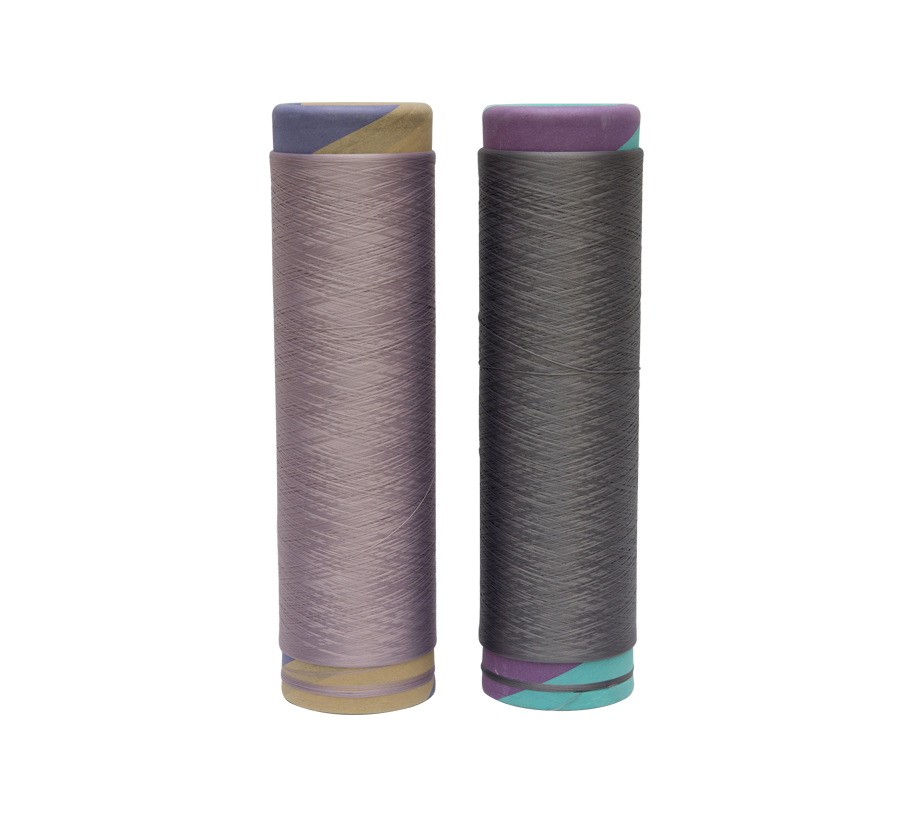 Custom 300D/96F Colored DTY Polyester YarnColored 300D/96F trilobal-bright DTY polyester yarn with over 1000 color options for knitting, weaving, sewing, and embroidery where shade matching matters.View Product →
Colorways are available at the 300D/96F count in one colored DTY range, from navy and milk white to rose red and watermelon red.
A DTY yarn supply audit should confirm four things before the first bulk order: declared grade, intermingle consistency, filament count accuracy and export documentation.
Grade is the fastest filter. Yarn declared at Grade A and Grade AA is stating that the package passed the producer's own inspection standard, and that declaration should be written into the contract rather than into a brochure. Intermingle consistency matters more than the nominal band, because a HIM yarn that varies across the package will still produce stop marks. Filament count accuracy protects fabric weight and hand. Export documentation protects the delivery date.
For reference, Hangzhou Dingkai Chemical Fibre Co., Ltd. was established in 2007 and manufactures polyester DTY yarn, polyester SD yarn, high intermingle yarn and polyester raw material on a 15,000 square meter site in Hangzhou, close to Hangzhou International Airport. The company declares Grade A and Grade AA product levels and exports to more than 30 countries, including Vietnam, Cambodia, Myanmar, Korea, Ukraine, Russia, Morocco, the Philippines and Mexico.
A DTY supplier that can state its intermingle ranges in nodes per meter, in writing, is describing a controlled process rather than a stock item, and that is the difference knitters notice on the machine.
Yes. DTY yarn is used across circular knitting, flat knitting and warp knitting. The specification changes rather than the yarn family: fine-gauge circular machines favor 75D to 150D with medium or high intermingle, while flat knitting and coarse gauge structures tolerate lower intermingle and heavier deniers.
HIM yarn in the 100 to 120 nodes per meter range is the safe default for fine-gauge single jersey at high feeder counts, because the closed filament bundle limits ribboning, stop marks and needle lines. SIM yarn in the 40 to 50 node range works where machine speed is moderate and the fabric structure is more open.
Yes, for relaxed jersey, light rib and many home textile structures, DTY yarn alone provides enough crimp recovery. Close-fitting apparel, cuffs and compression panels need a plated elastane yarn, because textured polyester does not hold permanent stretch the way elastane does.
Run a trial on the machine gauge that will be used in production, check intermingle consistency across multiple packages, confirm the declared grade in writing, and compare finished fabric weight against the specification. A single-package sample will not reveal the variation that creates stop marks in bulk.

Breathable Brown Black 300D/96F DTY Yarn High-Intermingled 99.99% Polyester Yarn...
See Details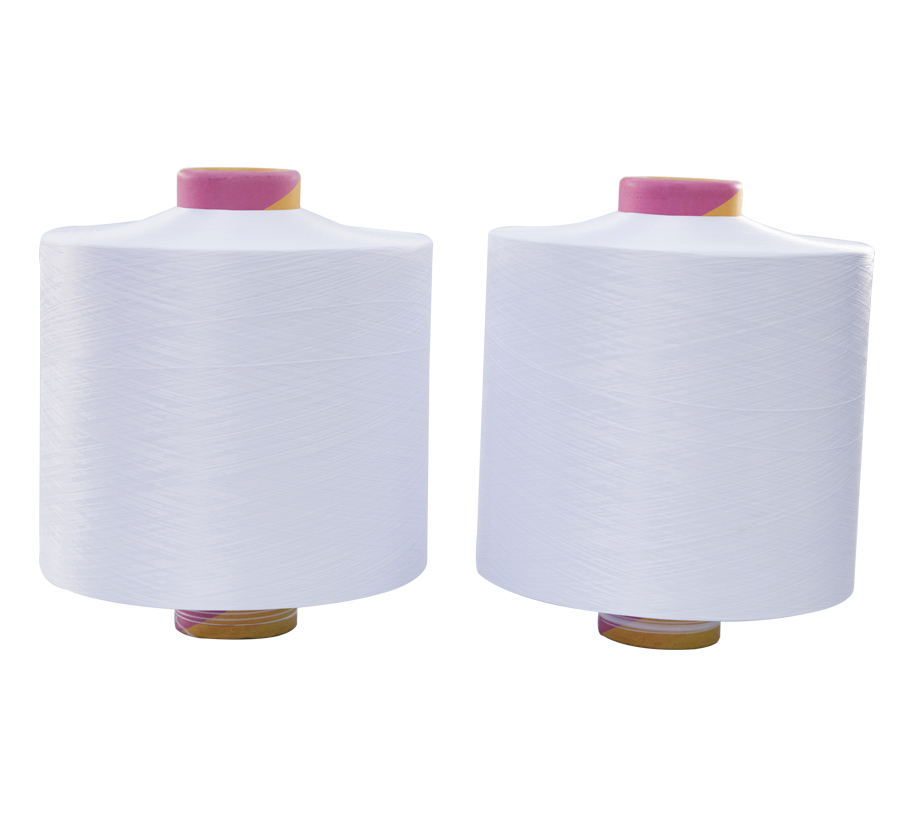
300D/96F OPTICAL WHITE NIM Polyester Yarn Name: 300D/96F OPTICAL WHITE NIM Polye...
See Details
Recycled 150D48F RW HIM Polyester Yarn Type: Polyester Yarn Pattern: Raw Technic...
See Details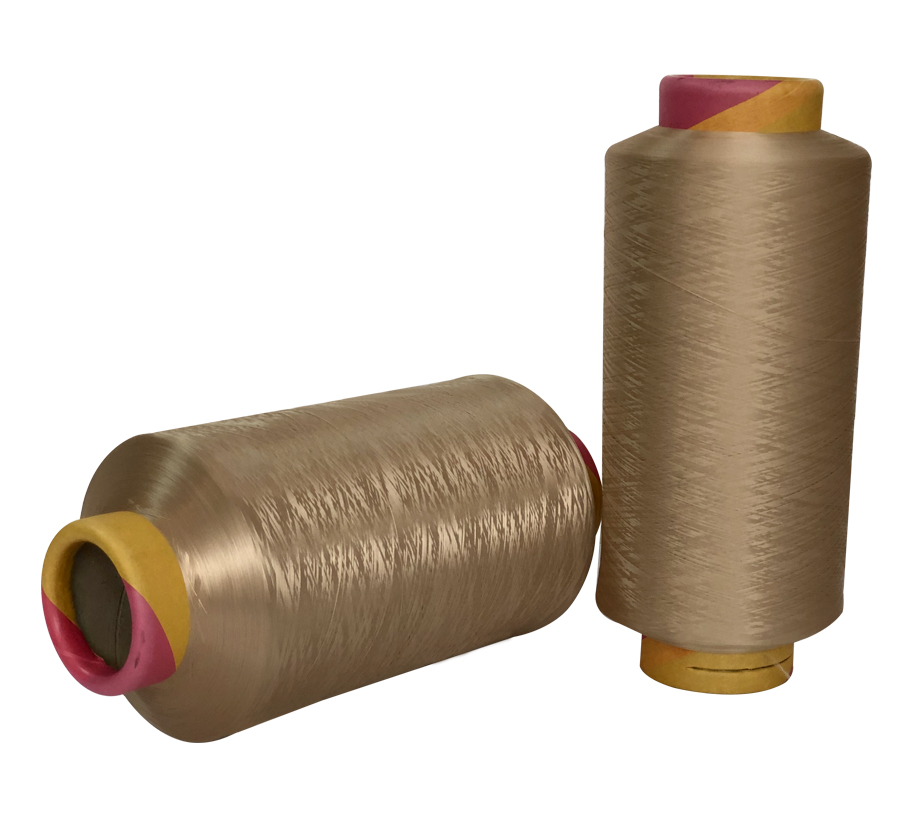
High Temperature-Resistant 300D Brown 99.99% Polyester Yarn for Hand Knitting an...
See Details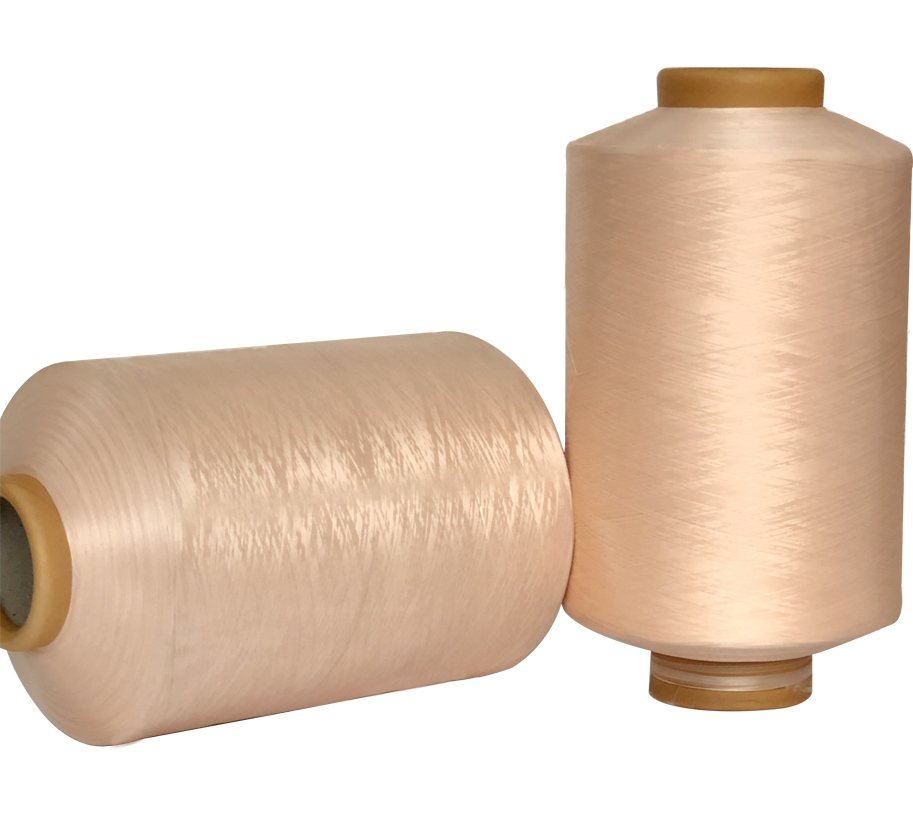
High Strength 300D Orange brown 99.99% Polyester Yarn for Embroidery/KnittingCol...
See Details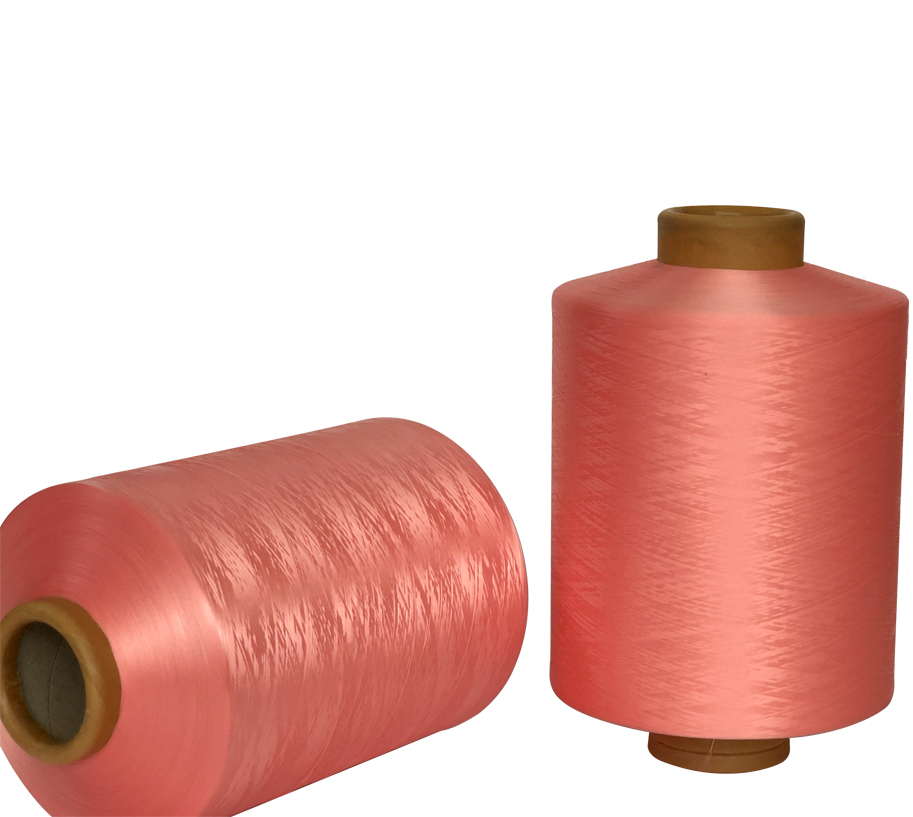
300D Watermelon Red 99.99% Polyester Yarn for Knitting Color: Watermelon Red Mat...
See Details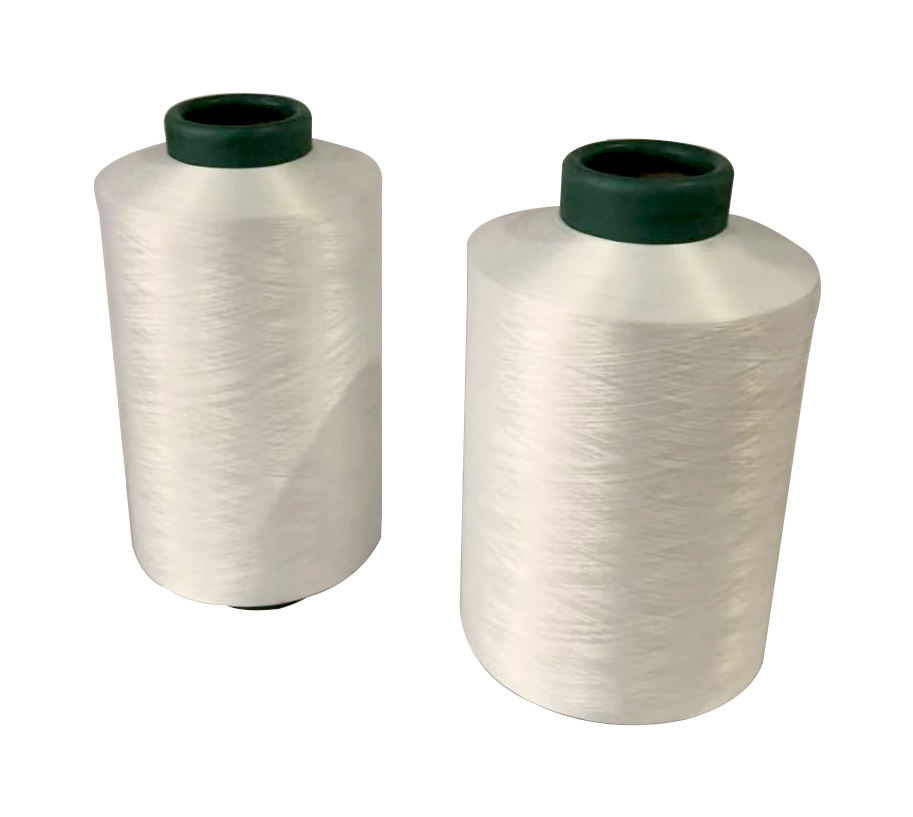
200D/96F RW NIM Polyester Yarn Name: 200D/96F RW NIM Polyester Yarn Color: White...
See Details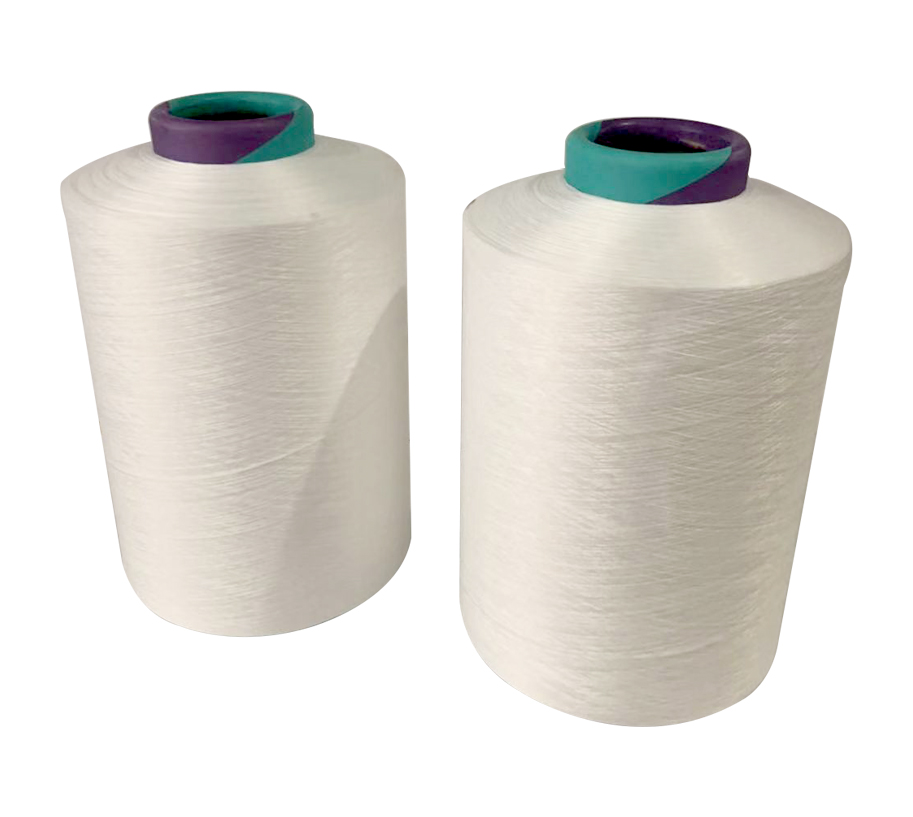
High Tenacity 250D/96F RW NIM Polyester Yarn Yarn Count: 250D/96F Material: 99.9...
See DetailsCopyright © Hangzhou Dingkai Chemical Fibre Co., Ltd. All Rights Reserved.
Wholesale China Polyester DTY Yarns Factory
