Call:+86-571-82912975
 https://www.dkyarn.com
 English
 中文简体
Sustainable 300D/96F Polyester Color Yarns BLACK NIM Product specifications:300D...
See Details

That gap between purchase specification and processing window is where most textile quality losses sit. Yarn quality is not a single grade stamped on a label. It is the measured stability of denier, tenacity, elongation, hairiness, intermingle nodes, oil pickup and dye affinity across every package in the lot.
The commercial consequence is direct. A yarn lot that costs 4% less per kilogram but adds two extra stops per shift and a 2% dye rework rate is not cheaper. It is a longer, slower production line with a hidden cost centre attached.
Yarn quality in textile processing is the ability of a lot to pass through warping, knitting, weaving and dyeing without unplanned stops, surface defects or shade variation.
That definition moves the measurement point. A certificate of analysis that reports a single average tenacity value says very little. A knitting machine responds to the weakest 1% of the package, the thickest place in 10,000 metres, and the one package in 40 that took up oil differently from its neighbours.
For DTY, seven parameters predict most downstream failures. They belong on the incoming inspection sheet, not on the list of things checked after the fabric is finished.
| Parameter | What to check | Failure when out of band |
| Denier CV | Within 1.5% of nominal | Barrel lines, gauge mismatch |
| Tenacity CV | Under 4% within lot | End breaks at warp and needle |
| Elongation CV | Under 6% | Loop distortion, tight courses |
| Hairiness | Under 3 protruding filaments per 10 m | Fluff build-up, false stops |
| Intermingle nodes | NIM 0-10, SIM 40-50, HIM 100-120 per metre | Split ends on the beam |
| Oil pickup | 0.25-0.35% by weight | Static, dye streaks, creel slip |
| Dye uptake | Shade difference under 0.8 dE between packages | Shade banding in the greige |
Hangzhou Dingkai Chemical Fibre Co., Ltd. grades its DTY yarn as Grade A and Grade AA, and publishes intermingle ranges of NIM 0-10, SIM 40-50 and HIM 100-120 nodes per metre. Those ranges are a processing specification, not a marketing line: they change how the yarn behaves on a beam.
The first measurable cost of low-quality yarn is stop rate, not fabric price.
Warping amplifies variation. A package with 2% more elongation than its neighbours runs at a different tension, and the accumulated difference over 600 ends shows up as a slack end or a broken end at the beam. On the knitting floor, denier CV and tenacity CV convert directly into needle lines, dropped stitches and machine stops.
The comparison is not about the average. Both lots can average 150 denier. The high-CV lot fails because the machine cannot adjust tension per end in real time. A warper will try, a knitter will not.
This is why lot qualification should include a DTY quality evaluation on at least three packages per carton, not one sample from the top layer.
Intermingle density is the most under-specified quality parameter in DTY purchasing, and it has a direct effect on processing yield.
NIM yarn has almost no interlace. It opens easily, which suits twisting and air-covered applications, but it will split on a high-speed beam. SIM gives enough cohesion for weaving preparation. HIM holds the filaments together through warp knitting and direct beaming, where a split end becomes a broken end within seconds.
Hairiness is the second hidden variable. Protruding filaments build up on guides, needles and tensioners. The operator sees fluff; the machine sees a false stop, a needle latch failure or a ring mark that only appears after dyeing. A yarn with good average tenacity but high hairiness will still run badly.
Dye defects are usually purchased, not created. Package-to-package variation in oil pickup, density and crystallinity shows up as shade banding that no dyehouse correction can fully remove.
Three mechanisms dominate:
On the processing line, the same oil film that causes dye streaks also changes friction. A package running dry will throw more hairiness and generate static. A package running wet will slip on the creel and produce tension variation. The dyehouse sees the result three processes later.
Poor yarn quality is cheaper to buy and more expensive to run. The gap shows up in machine time, not in the invoice.
That calculation covers one machine and one quality band. A mill with 40 machines does not need a large CV difference to turn a 3% yarn discount into a five-figure monthly loss. The correct comparison is delivered cost per acceptable metre, not price per kilogram.
Yarn quality also changes the cost of quality control. A stable lot can be sampled at 3 packages per carton. A variable lot needs 10 or more, plus knitting trials and dye swatches, before it is released to production.
A lot that passes incoming inspection should be released on evidence, not on the supplier's grade label. Six checks catch most processing failures before the first beam is made.
If the process is warp knitting, add a beam trial. If the process is circular knitting, add a 30-minute run at production speed. The trial cost is small compared with a stopped machine.
For lot samples and specification confirmation, contact the mill before the order is fixed, not after the first beam fails.
Specification choice is a process decision. The denier, filament count and intermingle level should be selected from the machine route backwards, not from a price list forwards.
Each specification is available in Grade A and Grade AA, with intermingle levels controlled to the NIM, SIM and HIM ranges above. The practical check is the same at every stage: measure the lot, run the trial, and compare the delivered cost per acceptable metre.
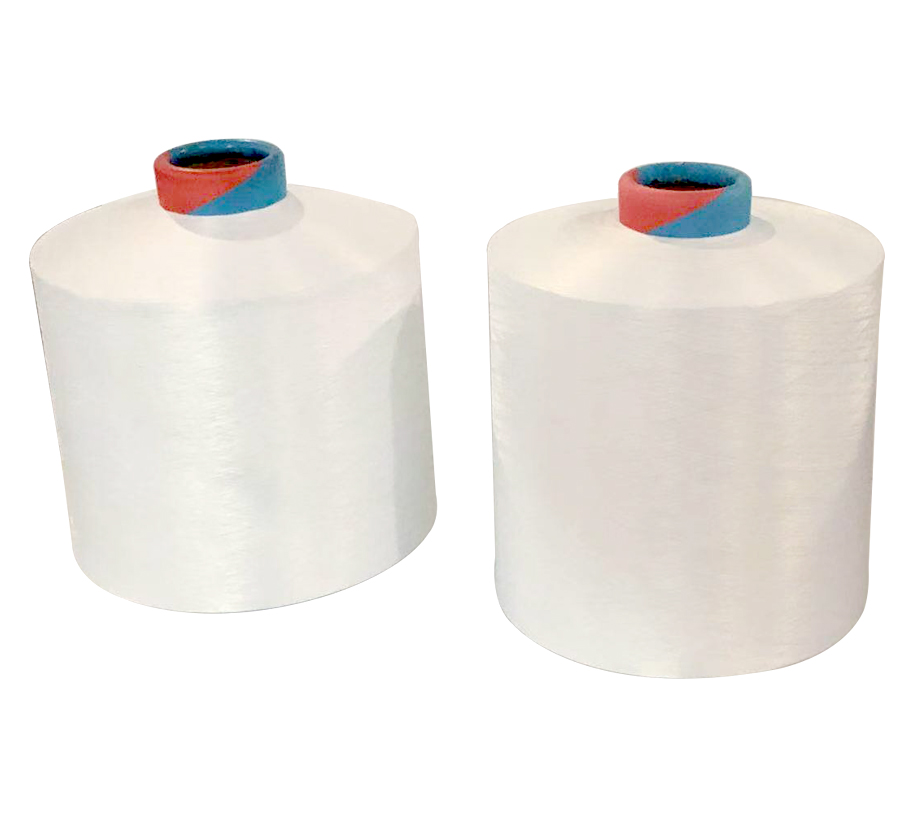 Recycled 150D/48F HIM Polyester DTY YarnGrade AA recycled 150D/48F polyester DTY with HIM intermingling for knitting and weaving; check lot consistency and trial performance against acceptable-metre cost.View Product →
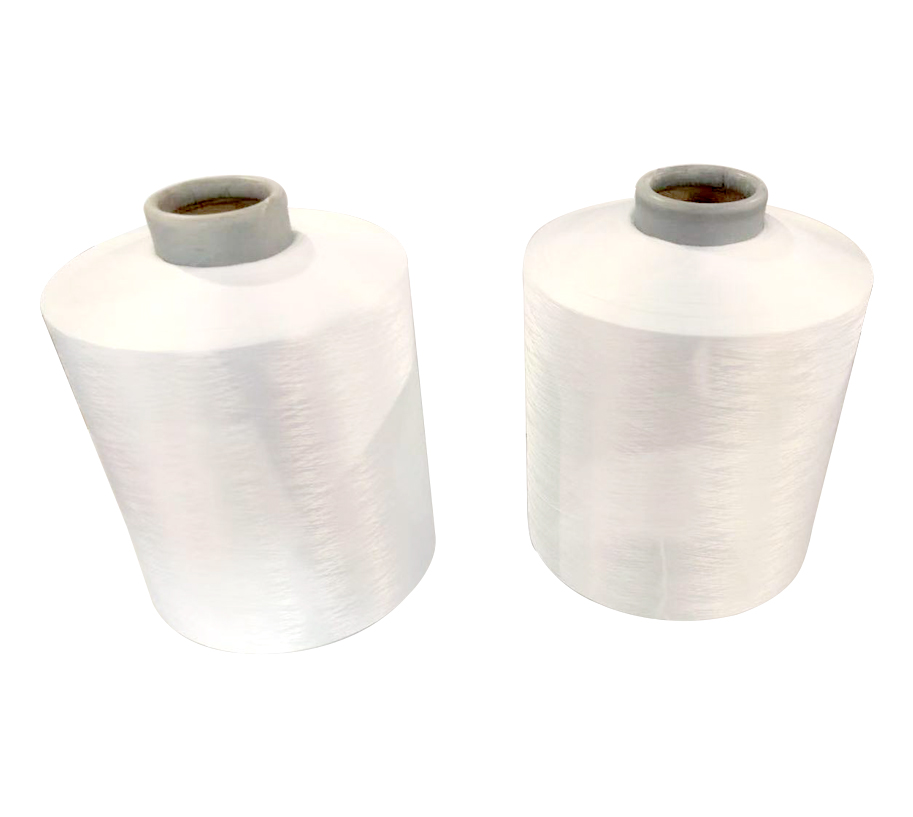 300D/96F NIM Polyester SD DTY YarnHigh-elastic 300D/96F polyester SD DTY yarn in Grade AA with NIM intermingling and OEKO certification; review specifications for weaving, knitting and embroidery trials.View Product →
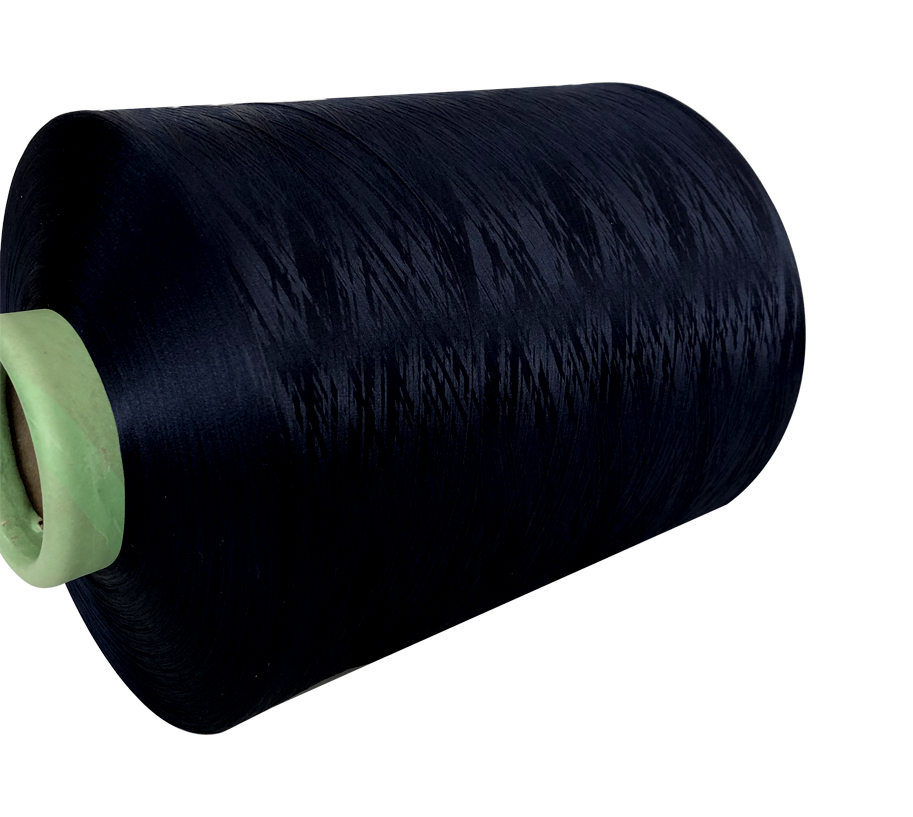 Custom 300D Navy Polyester DTY Filament YarnEco-friendly 300D navy polyester DTY with customizable colors and Oeko-Tex/ISO certifications for sewing and weaving; compare grade and intermingle options.View Product →
No. Tenacity helps at the warp and needle, but high tenacity with high elongation CV still causes loop distortion and stop-outs. Processing performance depends on the weakest package, not the average tenacity.
Denier CV predicts stop rate; hairiness predicts defect rate. A lot with good denier CV and high hairiness will run without many breaks but produce fluff, ring marks and false stops on guides. Both need a specification limit.
Only within a narrow band. Oil pickup and package density variation change how each package takes up dye, so the correction that fixes one package over-corrects another. Prevention belongs at the yarn specification stage.
HIM, typically 100-120 nodes per metre. Below that, the filament bundle opens on the beam and a split end becomes a broken end. For weaving preparation, SIM at 40-50 nodes per metre is usually sufficient.
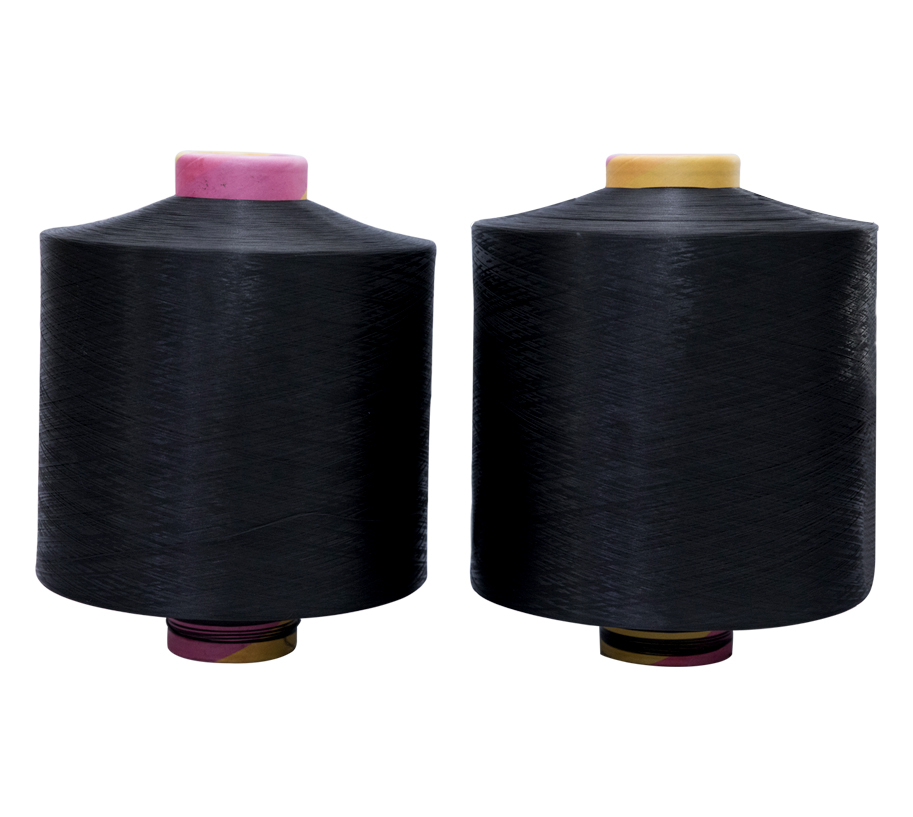
Sustainable 300D/96F Polyester Color Yarns BLACK NIM Product specifications:300D...
See Details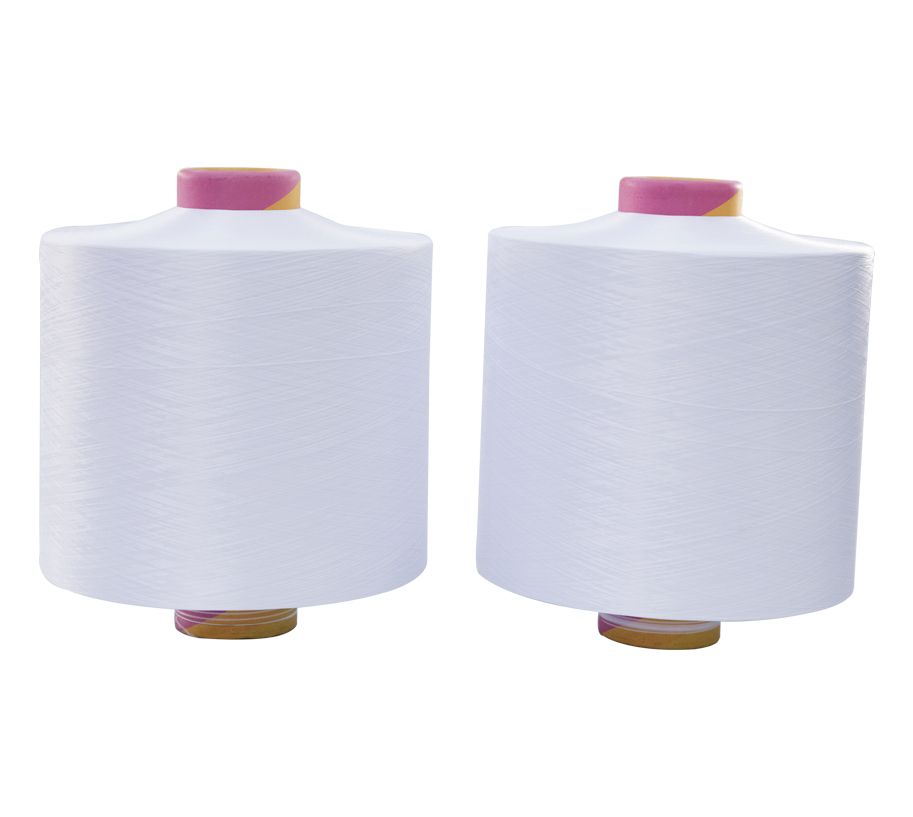
300D/96F OPTICAL WHITE NIM Polyester Yarn Name: 300D/96F OPTICAL WHITE NIM Polye...
See Details
Recycled 150D48F RW HIM Polyester Yarn Type: Polyester Yarn Pattern: Raw Technic...
See Details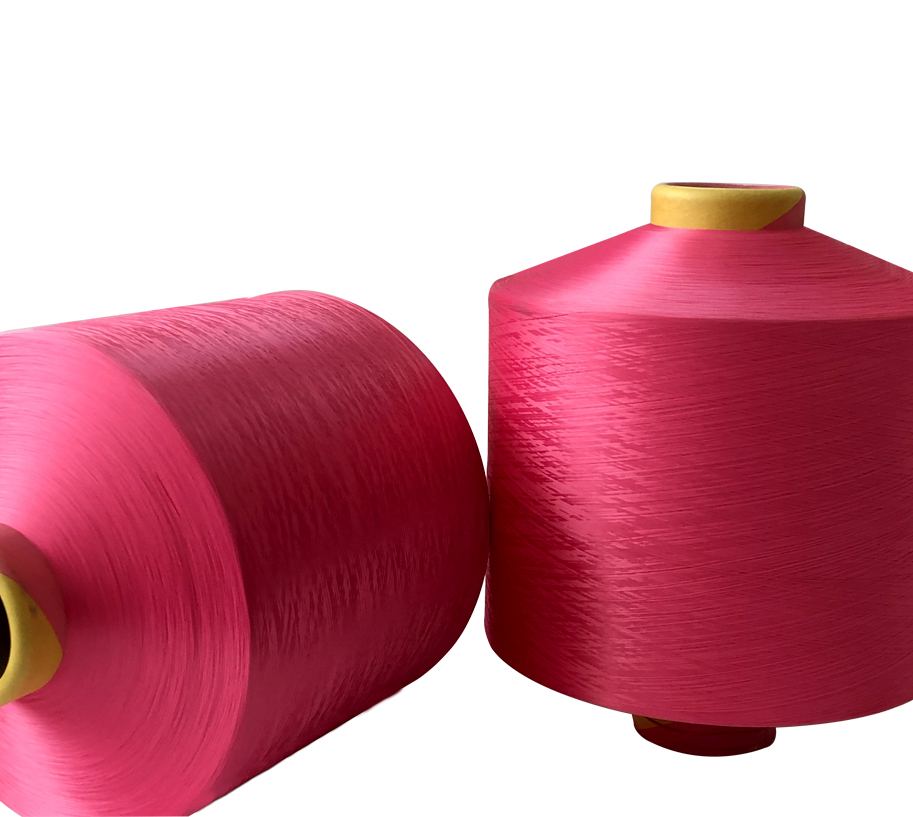
Durable 300D Rose Red 99.99% Polyester Yarn for Weaving & EmbroideryColor: R...
See Details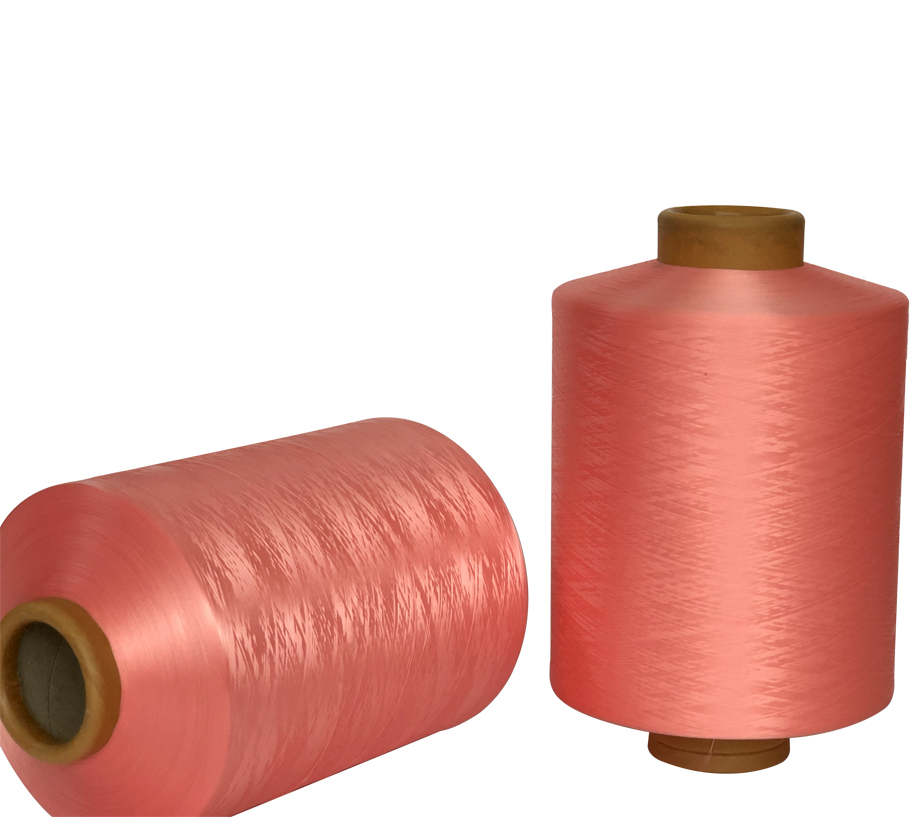
300D Watermelon Red 99.99% Polyester Yarn for Knitting Color: Watermelon Red Mat...
See Details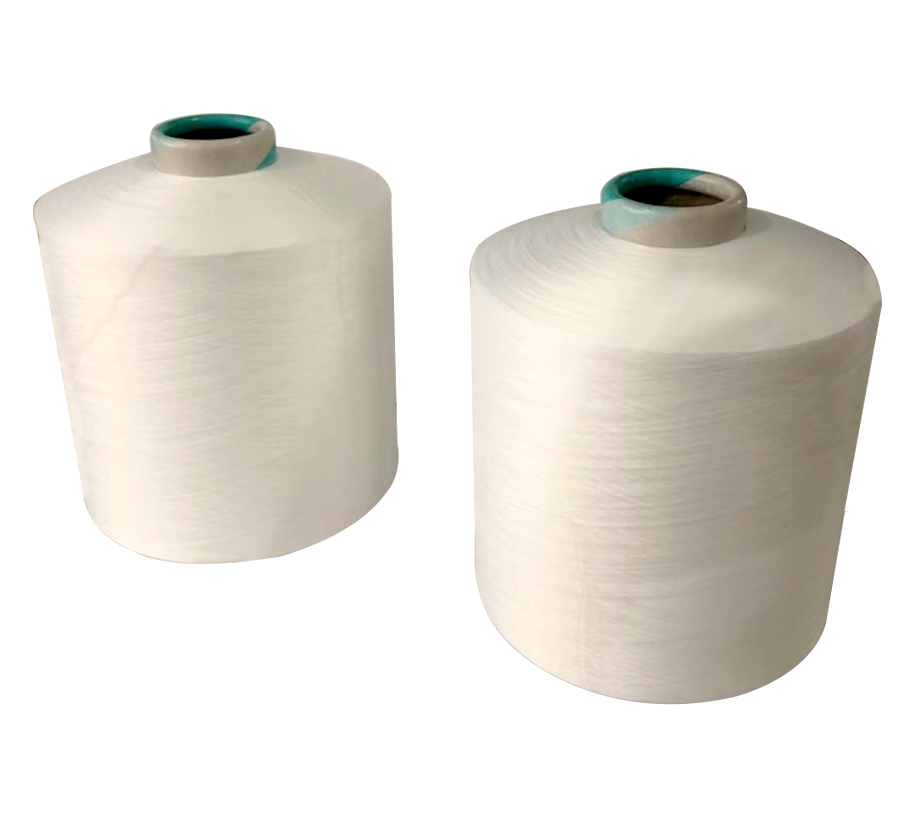
Anti-Bacteria 75D36F RW NIM(WHIT LITTLE INTEREMINGLE) Polyester Yarn Yarn Count:...
See Details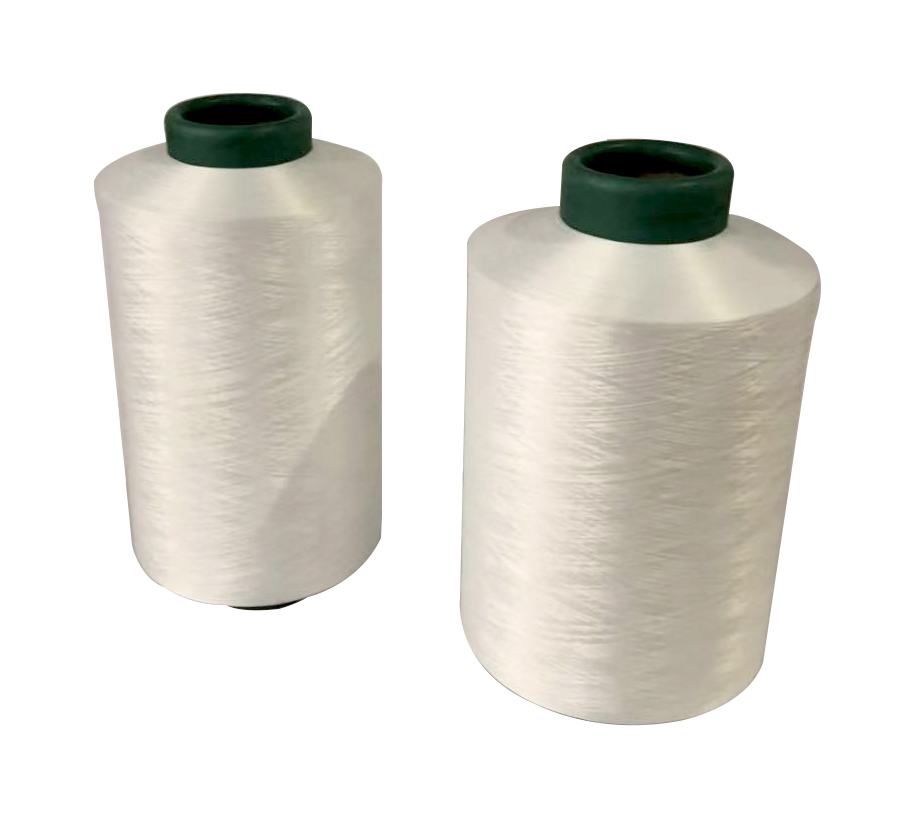
200D/96F RW NIM Polyester Yarn Name: 200D/96F RW NIM Polyester Yarn Color: White...
See DetailsCopyright © Hangzhou Dingkai Chemical Fibre Co., Ltd. All Rights Reserved.
Wholesale China Polyester DTY Yarns Factory